
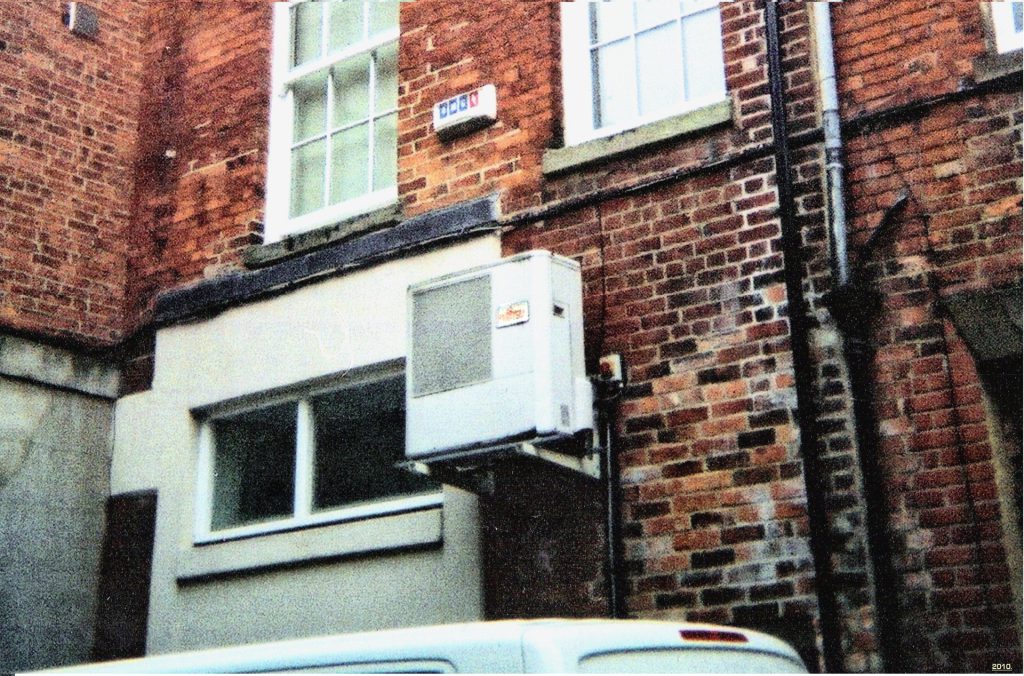
Bali is warm and humid all year, and humid air carries moisture into every room that is not actively dried. When guests complain of a musty smell, or housekeeping keeps finding mould behind the wardrobe, the cause is usually mechanical rather than a cleaning failure.
Cooling is not the same as dehumidifying
An air conditioner removes moisture only while its coil is running cold and long enough for water to condense and drain away. Several common situations stop that happening:
- Oversized units. A unit that is too big cools the room quickly, switches off, and leaves the moisture behind. The room feels cold and clammy at the same time.
- Untreated fresh air. Outdoor air brought straight into rooms or corridors without being dried first adds moisture faster than room units can remove it.
- Negative pressure. If a room’s exhaust removes more air than is supplied, humid outdoor air is drawn in through gaps around doors, windows and services — and condenses inside walls.
- Units switched off in empty rooms. A closed, unconditioned room in Bali is an incubator. Rooms out of sale still need some dehumidification.
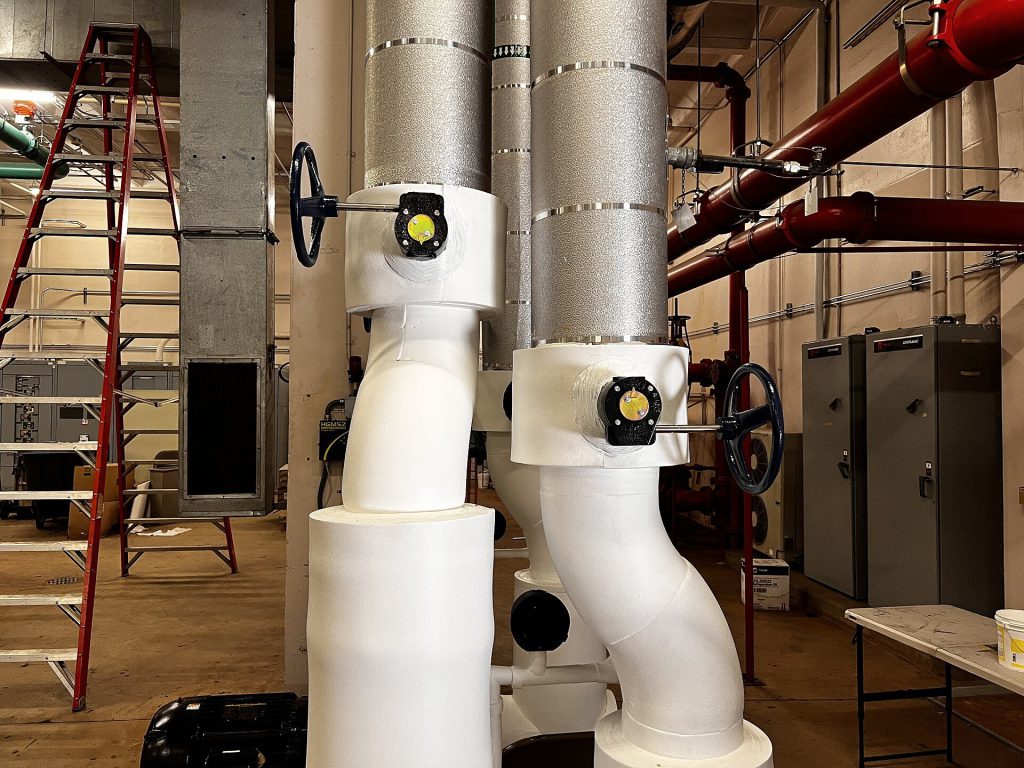
Illustrative photo: insulated chilled water pipework. Photo by IanVG via Wikimedia Commons, CC0.
Where condensation hides
Chilled water pipes and refrigerant lines run far below the dew point of Bali’s air. Wherever their insulation is thin, damaged, or its vapour barrier broken, the pipe “sweats” — and the water drips into ceilings and wall cavities where nobody sees it until a stain appears. The same goes for blocked condensate drains and drain pans that have not been cleaned.
A short checklist for engineering teams
- Keep room setpoints moderate — around 24–26°C — rather than very low; very cold surfaces in a humid building attract condensation.
- Clean filters, coils, drain pans and condensate traps on a fixed schedule.
- Inspect pipe insulation in ceiling voids during every renovation and repair every break in the vapour barrier.
- Check that each room’s supply and exhaust are balanced so the room is slightly positive, not negative.
- On coastal sites, rinse outdoor coils and specify corrosion-protected coils, so the units keep running at the capacity they were designed for.
When a property has a persistent mould problem, the lasting fix is usually a design one: correctly sized units and fresh air that is dried before it enters the building.