
Bali’s water stress is now a regular headline. Researchers and NGOs report that tourism accounts for well over half of the island’s groundwater use, and the IDEP Foundation has documented seawater intrusion into aquifers in several of Bali’s regencies. The exact figures vary from study to study; the direction does not.


Most hotels and villas on the island depend on deep wells. That makes water efficiency something an MEP contractor can actually change — not with a policy, but with meters, pipes and pumps.


Start by measuring

A property that only reads one meter at the well head cannot tell whether its water is going to guest rooms, the laundry, the pool, irrigation or a leak. Sub-metering the main users is the cheapest first step, and it usually pays for itself the first time it catches an underground leak that has been running for months.


Five measures that work in Bali

  • Fix the fixtures. Flow-regulated shower heads and taps, and dual-flush cisterns, cut consumption without guests noticing — if they are selected for Bali’s water pressure and hardness.
  • Harvest the roof. Rainwater collected from roofs during the wet season can supply irrigation, toilet flushing or cooling-tower make-up through a separate, clearly marked non-potable network.
  • Reuse treated effluent. A properly maintained sewage treatment plant (STP) can return water for irrigation instead of discharging it, with filtration and disinfection sized for the use.
  • Manage the pool and the cooling tower. Pool backwash and cooling-tower bleed are two of the largest hidden users on a resort. Controlling them by water quality rather than by timer saves significant volume.
  • Put water back. Recharge wells (sumur resapan) return storm water to the ground instead of the drain.
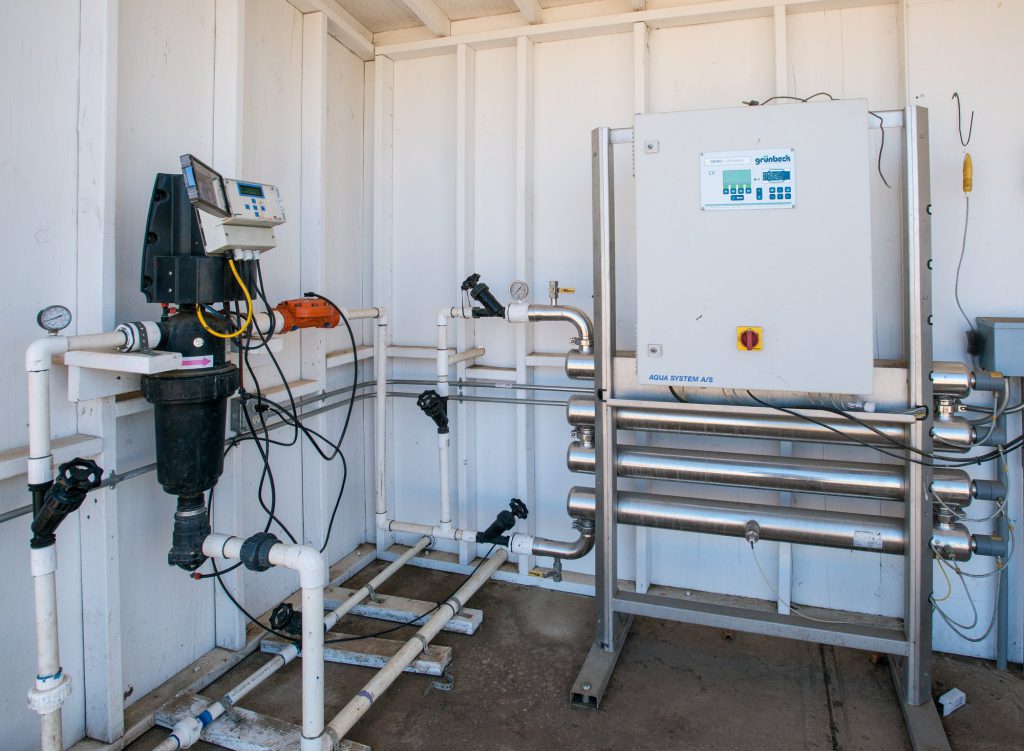
Packaged water treatment skid

Illustrative photo: a packaged water treatment skid. Photo by USDA NRCS via Wikimedia Commons, public domain.

The plumbing rule that matters most

Every alternative water source needs its own pipework, colour-coded and labelled, with no possible cross-connection to drinking water. A rainwater or recycled-water system installed without that discipline turns a sustainability project into a health risk. It is one reason we treat these systems as engineered installations, not add-ons.


As members of APIN, the national plumbing association, we design and install water supply and drainage to SNI standards — and in a Bali hotel today, that increasingly includes making every litre count.
Want To Know Where Your Water Goes?

We can meter, survey and propose a staged plan that fits an operating property.

REQUEST A QUOTE

In early 2024 the Ministry of Energy and Mineral Resources issued Regulation No. 2 of 2024 on rooftop solar, replacing Regulation 26 of 2021. Two changes matter most to a hotel owner:


  • Exported energy is no longer credited. Surplus power sent back to the grid from new systems does not reduce the electricity bill. Net metering, in practice, is over for new installations.
  • Connections run on a quota. Grid licence holders such as PLN set multi-year quotas for rooftop solar capacity in each system, and applications are processed against them.


Systems already operating, or already approved before the new rule, were covered by transitional provisions.


What that means for sizing

Under the old rules, a larger array could bank surplus against night-time use. Now every kilowatt-hour that is not used on site the moment it is generated is effectively given away. The right size is therefore set by the property’s daytime base load, not by the roof area.


Hotels are well placed for this. Chillers or VRV systems, laundry, kitchens, pool pumps and water pumps all run through the middle of the day. A system sized to sit under that load — confirmed by a few weeks of interval metering — will see nearly all of its output used.

Size the array for the load you can see on the meter at noon, not for the roof you happen to have.

BCM Project Team

The MEP details that decide whether it performs

  • Roof and waterproofing. Check the structure for the added load and design every penetration and fixing so it does not become next wet season’s leak.
  • Inverters need air. In Bali’s heat, inverters installed in unventilated roof spaces derate. Give them shade and airflow.
  • Coastal sites corrode. Specify mounting, fixings and enclosures for salt-laden air.
  • Generators and solar must be coordinated. When the building is on generator, a solar system must not push power back into it. A proper controller or interlock is part of the design, not an extra.
  • Protection and earthing are designed and tested to PUIL, the national electrical installation standard.


Rooftop solar still makes sense for a great many Bali properties. It simply has to be engineered for self-consumption — and applied for early, before the local quota is taken.

Considering Rooftop Solar?

Share a few months of electricity bills and we will tell you what size actually pays back.

REQUEST A QUOTE

Most of the refrigerants in today’s air conditioning are HFCs — hydrofluorocarbons. They do not damage the ozone layer, but many are powerful greenhouse gases. The Kigali Amendment to the Montreal Protocol commits countries to phase down their use.


Indonesia ratified the amendment through Presidential Regulation No. 129 of 2022, and it took effect for Indonesia in March 2023. The national schedule, based on average consumption in 2020–2022, freezes HFC consumption in 2024 and then reduces it step by step:


  • 2029 — at least 10% below baseline
  • 2035 — 30% below
  • 2040 — 50% below
  • 2045 — 80% below


Indonesia does not produce HFCs; every kilogram is imported. As import allowances tighten, the price and availability of high-GWP refrigerants are likely to follow.


Why this matters for an owner today

A chiller or VRV system bought in 2026 should still be running in 2040. Over that life it will need top-ups after leaks and repairs. Equipment that relies on a refrigerant being squeezed out of the market can become expensive to service long before it is worn out.

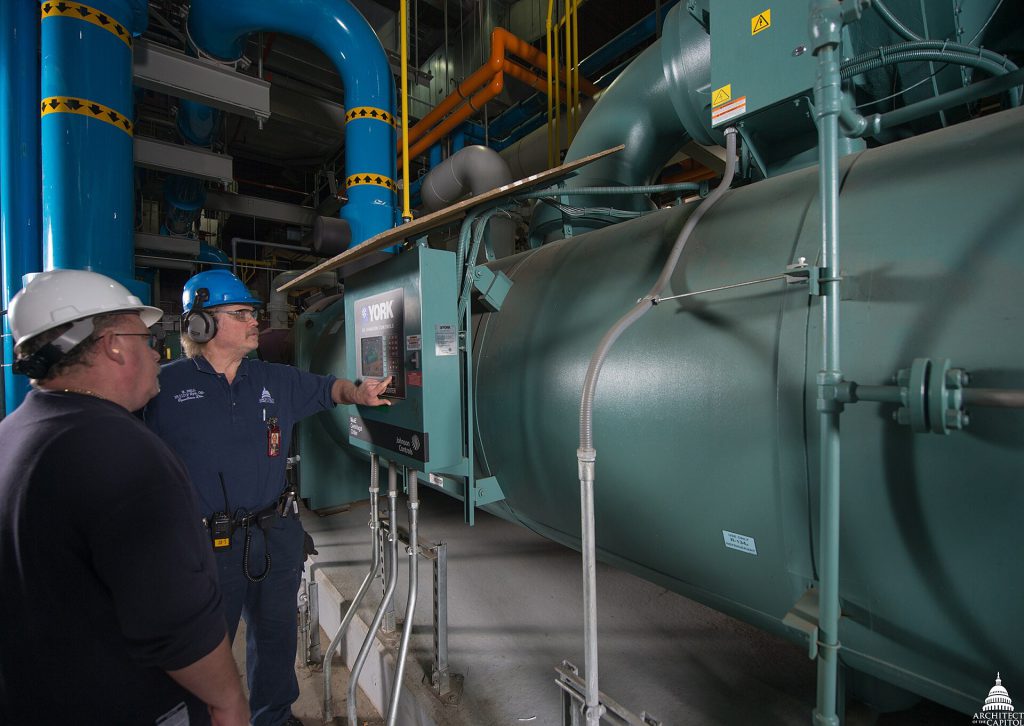
Central chilled water plant

Illustrative photo: a central chilled water plant. Photo by the Architect of the Capitol via Wikimedia Commons, public domain.

Practical steps

  • Ask about refrigerant at tender stage. Compare not only efficiency and price but the refrigerant’s global warming potential. R32, for example, has roughly a third of the GWP of R410A, which it is replacing in many split and VRV ranges.
  • Treat leak-tightness as a specification item. Brazing under nitrogen, a proper pressure test and deep evacuation before charging are what keep refrigerant in the system for decades.
  • Record the charge. Log how much refrigerant each system holds and every top-up. A rising log is the earliest sign of a leak.
  • Recover, never vent. Refrigerant removed during service should be recovered and handled properly.
  • Plan replacements. If your plant is approaching the end of its life, a planned replacement on a lower-GWP refrigerant is cheaper than an emergency one.


BCM is a member of ASISI, the national association for refrigeration and air conditioning technicians, and our crews work to these practices on every system we install.

Plant Getting Old?

We can survey your chillers or VRV systems and help you plan a replacement before it becomes urgent.

REQUEST A QUOTE

Indonesia’s building rules under Government Regulation No. 16 of 2021 work in two stages. Before construction, a project needs a PBG (Persetujuan Bangunan Gedung, building approval). Before the building can be used, it needs an SLF (Sertifikat Laik Fungsi, certificate of fitness for function). Applications go through the government’s SIMBG system.


Both stages involve MEP. The PBG technical review covers mechanical, electrical and plumbing plans alongside architecture and structure. The SLF follows an inspection that checks what was actually built against what was approved — and in Bali, practitioners report that it is now enforced rather than waved through.


What the MEP side usually needs

  • As-built drawings that show the systems as installed, not as first designed.
  • Equipment schedules with make, model and capacity for the main plant.
  • Testing and commissioning records — fire alarm and sprinkler tests, fire pump performance, generator load tests, earthing resistance measurements, water quality results.
  • Electrical installation certification. Electrical installations in Indonesia also require a certificate of operational fitness (Sertifikat Laik Operasi, SLO) from an accredited inspection body.
  • Equipment-specific inspections for items such as lifts and pressure vessels, which carry their own occupational safety certification.
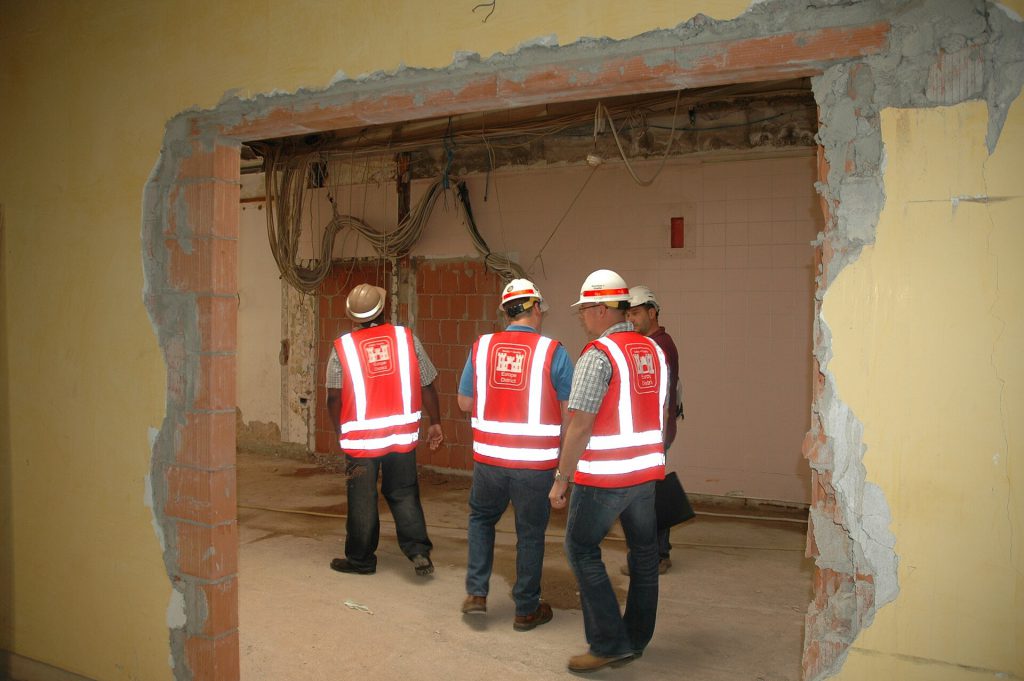
Inspectors viewing a renovation through a wall opening

Illustrative photo: an inspection walk-through during a building renovation. Photo by the U.S. Army Corps of Engineers Europe District via Wikimedia Commons, public domain.

Renovations count too

Many operating hotels are renovated in phases over years. Each phase changes the systems that the original approval described. Consultants in Bali report that SLFs for commercial buildings are renewed by re-inspection after a set period, so an existing hotel will meet this process again — and an out-of-date set of drawings becomes a problem at exactly the wrong moment.


Why we hand over current drawings

It is one of the things we promise every client: as-builts are updated at handover, not promised and forgotten. When the next inspection arrives, or the next renovation starts, the shaft layout, the risers and the single-line diagram are on file and correct.


Requirements differ between regencies and change over time, so owners should confirm the current list with the local building office. What does not change is that a well-documented installation makes the process far shorter.

Preparing For PBG Or SLF?

We can review your MEP drawings and test records and tell you what is missing before the inspection.

REQUEST A QUOTE