
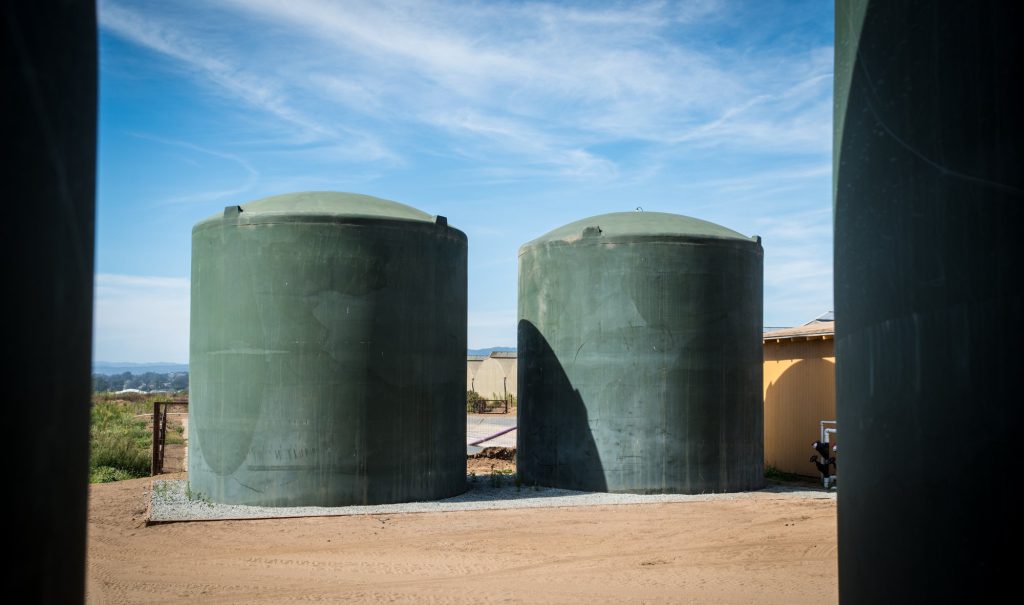
Bali’s water stress is now a regular headline. Researchers and NGOs report that tourism accounts for well over half of the island’s groundwater use, and the IDEP Foundation has documented seawater intrusion into aquifers in several of Bali’s regencies. The exact figures vary from study to study; the direction does not.
Most hotels and villas on the island depend on deep wells. That makes water efficiency something an MEP contractor can actually change — not with a policy, but with meters, pipes and pumps.
Start by measuring
A property that only reads one meter at the well head cannot tell whether its water is going to guest rooms, the laundry, the pool, irrigation or a leak. Sub-metering the main users is the cheapest first step, and it usually pays for itself the first time it catches an underground leak that has been running for months.
Five measures that work in Bali
- Fix the fixtures. Flow-regulated shower heads and taps, and dual-flush cisterns, cut consumption without guests noticing — if they are selected for Bali’s water pressure and hardness.
- Harvest the roof. Rainwater collected from roofs during the wet season can supply irrigation, toilet flushing or cooling-tower make-up through a separate, clearly marked non-potable network.
- Reuse treated effluent. A properly maintained sewage treatment plant (STP) can return water for irrigation instead of discharging it, with filtration and disinfection sized for the use.
- Manage the pool and the cooling tower. Pool backwash and cooling-tower bleed are two of the largest hidden users on a resort. Controlling them by water quality rather than by timer saves significant volume.
- Put water back. Recharge wells (sumur resapan) return storm water to the ground instead of the drain.
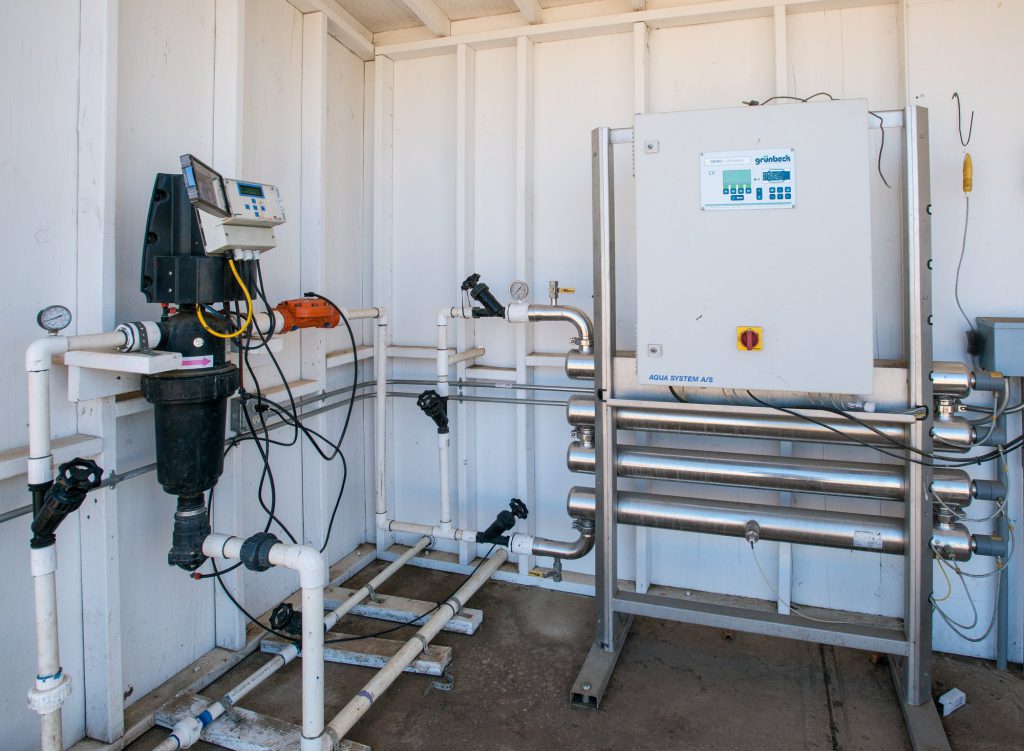
Illustrative photo: a packaged water treatment skid. Photo by USDA NRCS via Wikimedia Commons, public domain.
The plumbing rule that matters most
Every alternative water source needs its own pipework, colour-coded and labelled, with no possible cross-connection to drinking water. A rainwater or recycled-water system installed without that discipline turns a sustainability project into a health risk. It is one reason we treat these systems as engineered installations, not add-ons.
As members of APIN, the national plumbing association, we design and install water supply and drainage to SNI standards — and in a Bali hotel today, that increasingly includes making every litre count.